Skip to the main content.

Case Study: Fayetteville Arkansas 911
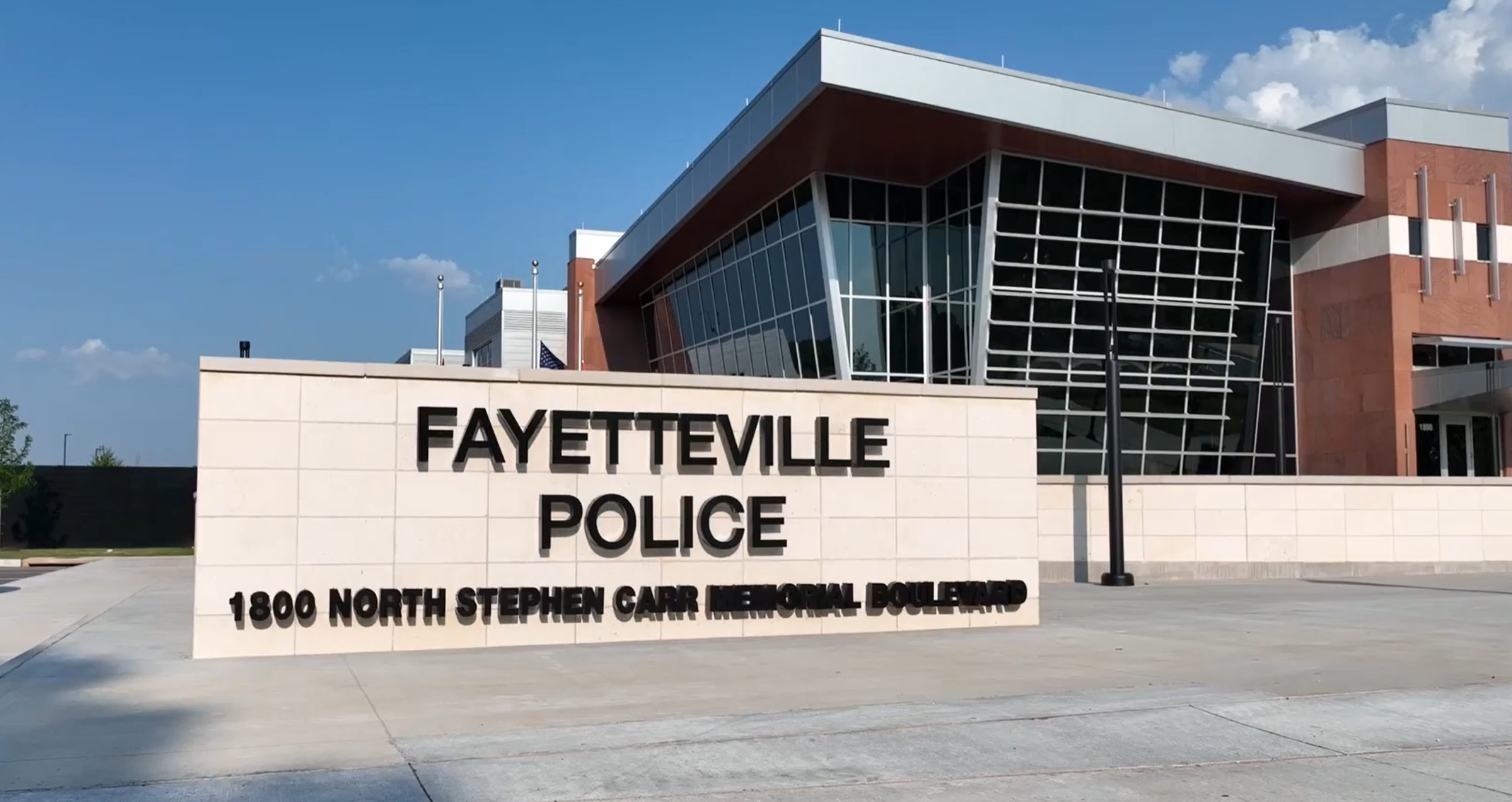
Fayetteville_Header

How a New Dispatch Center Transformed Morale, Performance, and Recruitment

When the Fayetteville Police Department began planning its new dispatch center, the goal wasn’t simply to upgrade equipment or move into a larger space. Leadership saw an opportunity to fundamentally rethink what a dispatch environment could be, not just functional, but human-centered.

The process started years before the building opened. Rather than making decisions alone, leadership brought dispatchers into the conversation early.

“We did surveys with all the employees… asking them what things they would like to see in the new center,”

“We incorporated everybody’s opinions throughout the whole building.” – Tisha, assistant dispatch manager


Check out this interview between Tisha, assistant dispatch manager, and Kayla Butler, South-Central Territory Manager for all the details! 


Designing for the People Doing the Work

Dispatch is high-pressure, emotionally demanding work. Leadership recognized that if they wanted better performance, they needed to first support the well-being of the people behind the consoles.Fayetteville_01
So instead of designing purely for efficiency, they designed for humans.

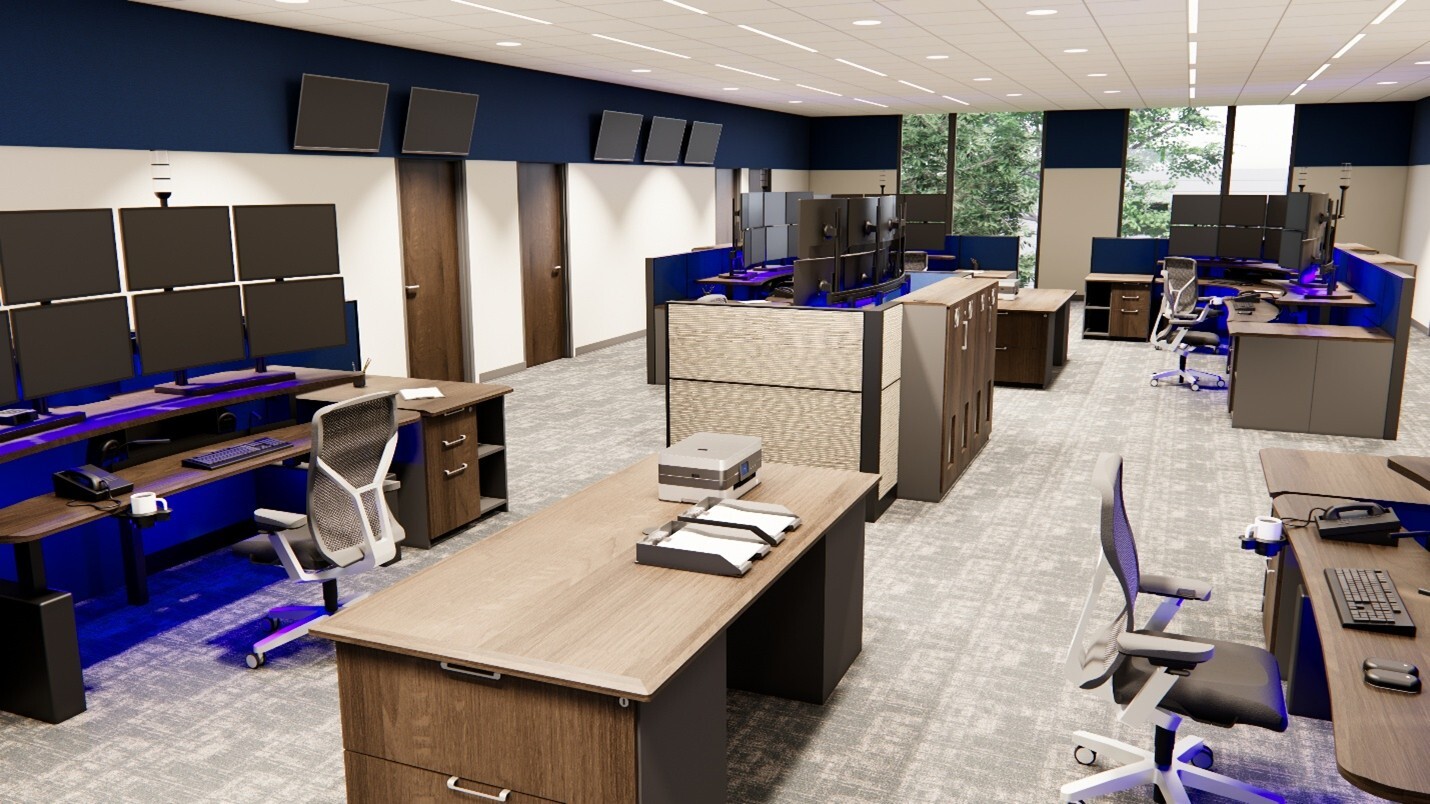
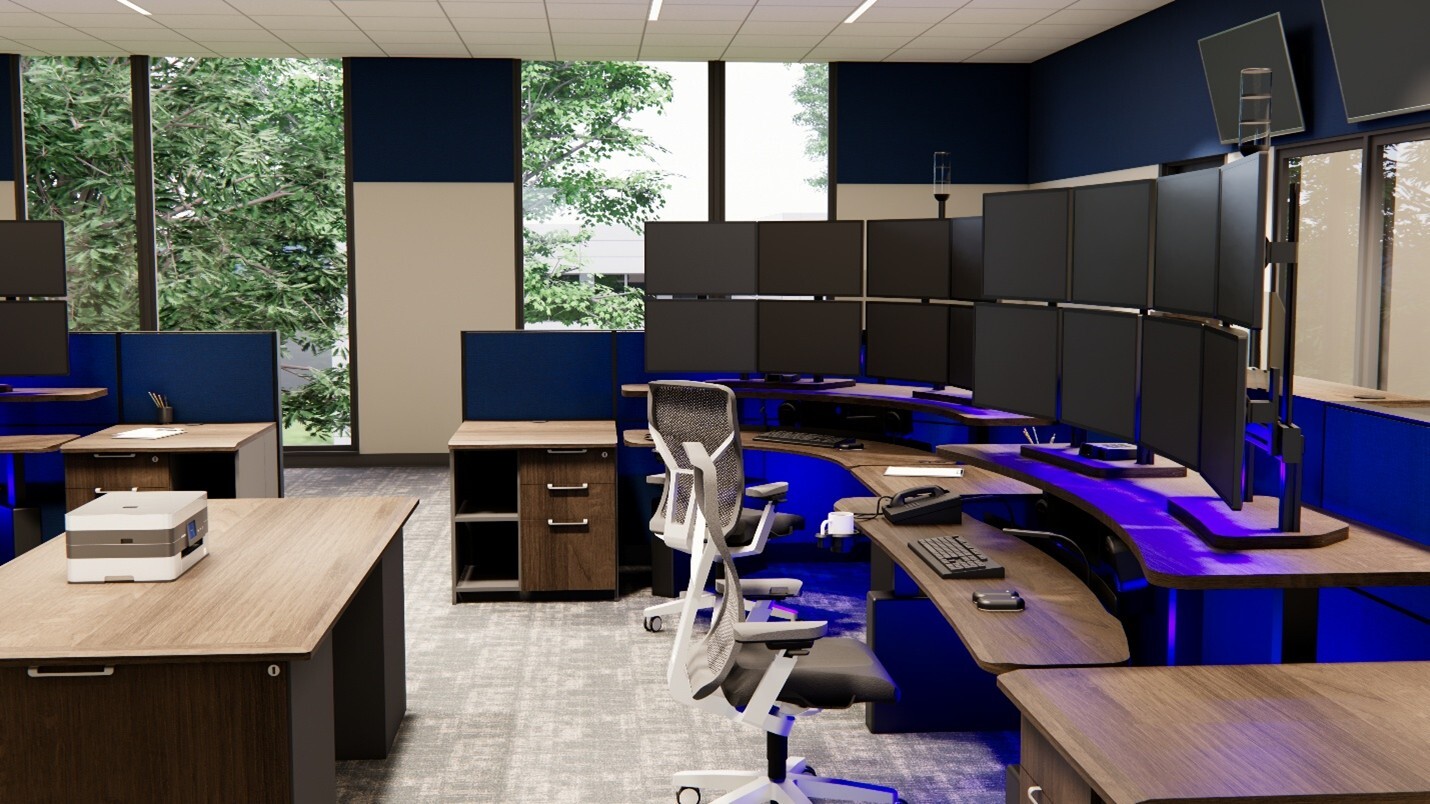
Natural light became a priority, with large windows added to both ends of the room. Dispatchers now work in a space that feels open and energizing during the day, rather than closed off and artificial. Quiet spaces were also introduced, including a dedicated recovery room where team members can step away after difficult calls and reset mentally.

Even small details reflected this shift in thinking. A full kitchen allows staff to prepare real meals during long shifts. An outdoor balcony offers a place to decompress before or after work. These were intentional choices designed to improve daily life on the job.


The Designer:

A lot of facilities prioritize capacity, how many stations can we fit? Fayetteville prioritized experience. And that’s what made the space more efficient. When people can move freely, adjust their setup, and recover when needed, everything works better

— Trevor Parson
Revit Manager & Designer with Xybix

TrevorP_Circle


Rethinking the Flow of Work

Beyond well-being, the team wanted to solve practical frustrations from their previous setup.

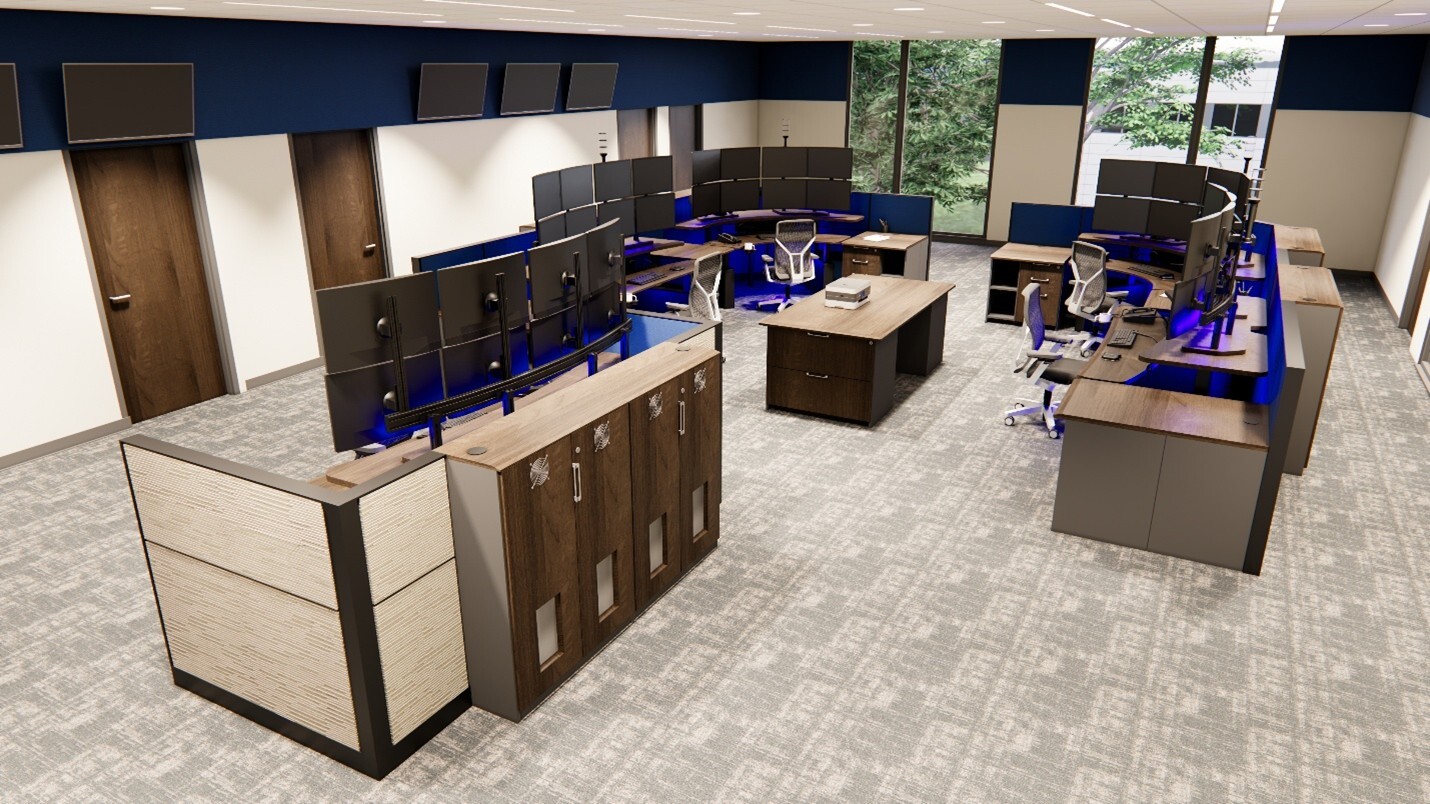
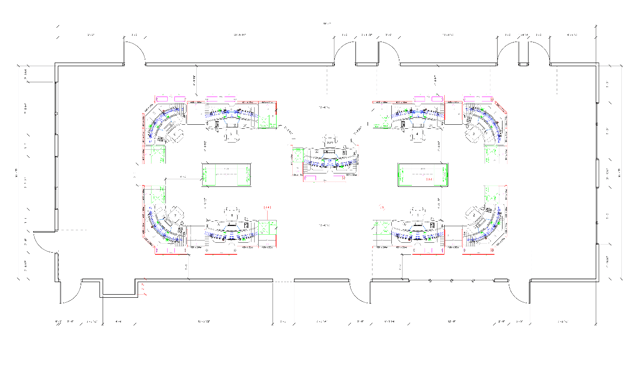
In the old space, simply moving from one side of the room to the other was inefficient and frustrating. The new design introduced a “racetrack” layout, allowing dispatchers to move freely throughout the space without obstacles. The result is a smoother workflow and a more connected team environment.

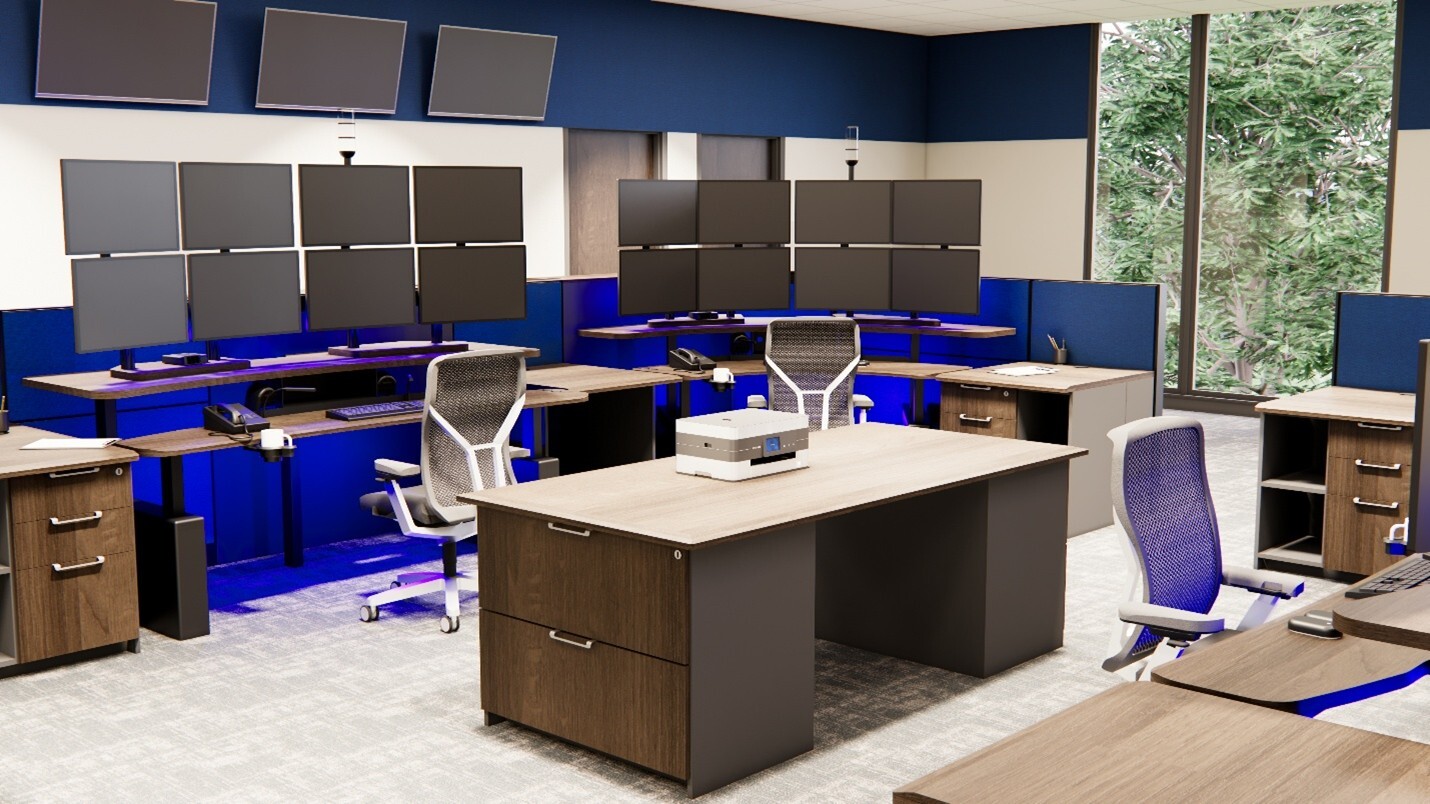
Workstations were also reimagined. Some positions are larger to accommodate side-by-side training, making it easier for new hires to learn without feeling cramped or isolated. Others offer more compact setups for those who prefer a tighter, more focused space. This flexibility gives dispatchers choice, something rarely considered in traditional environments.


Technology That Works with the Team, Not Against It

The consoles themselves became a major part of the transformation.Fayetteville_Desk 
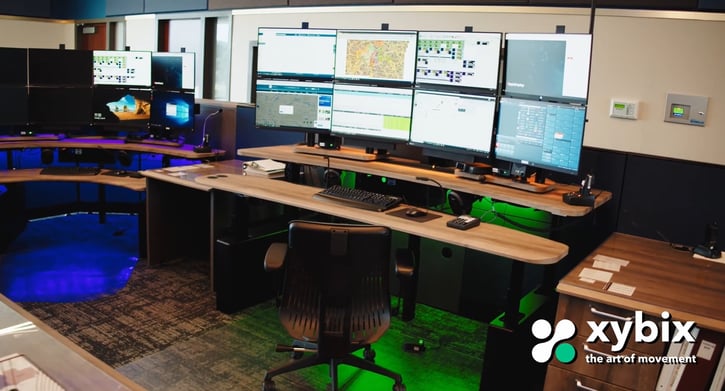
Each station is fully adjustable, allowing dispatchers to raise or lower desks, reposition monitors, and personalize their setup.

One standout feature, the ability to move monitor arrays forward and backward, gives users control over their viewing distance, which is especially important across a team with varying visual needs.

“What we like the most… is the monitor array moving forward and backwards. That is so important to us.”

Behind the scenes, thoughtful design improved operations as well. Rear-access CPU towers allow IT teams to service equipment without interrupting dispatchers, eliminating a common source of disruption and downtime.

These changes may seem subtle individually, but together they create a system that supports both performance and comfort.

A Smooth (If Not Stress-Free) Implementation

Like any large-scale project, the transition wasn’t without challenges. Installation took place while the building was still under construction, which added complexity and pressure.

But consistent communication made the difference.

The Fayetteville team had direct access to support throughout the process, with quick responses to questions and issues as they arose. That level of responsiveness helped turn what could have been a frustrating experience into a manageable, and ultimately successful, one.

“I had phone numbers. I could call and say, ‘What’s going on?’… and I got immediate responses. Communication was great, and it still is.”


Let Tisha take you on a tour of the facility:


The Impact: A Culture Shift

Once the 911 team moved into the new space, the results were immediate, and lasting.

Dispatchers embraced the environment quickly. They appreciated not just the physical upgrades, but the fact that their input had shaped the outcome. That sense of ownership translated into stronger morale and a deeper sense of community.

Supervisors noticed the difference right away. With fewer complaints and a more positive atmosphere, day-to-day management became easier. Teams collaborated more naturally, handled stress more effectively, and maintained a higher level of performance.

As one leader put it “when the team is happy and supported, everything else gets easier.”


Let the Fayetteville 911 employees tell you their story


Let the Fayetteville 911 employees tell you their story


Let the Fayetteville 911 employees tell you their story


Let the Fayetteville 911 employees tell you their story


A Powerful Tool for Recruitment

One unexpected benefit of the new center has been its impact on hiring.

Dispatch is a role that’s often misunderstood from the outside. It’s difficult to grasp the intensity of the work without seeing it firsthand. By creating a space worth showcasing, and pairing it with visual content, the department can now give candidates a clear, honest look at what the job entails.

That transparency helps reduce uncertainty and builds trust before the first interview even happens.


Watch the special recruitment video we made for Fayetteville 911:


What Other Organizations Can Learn

This project offers a clear lesson: the best operational improvements often start with people, not processes.

By involving employees early, prioritizing well-being, and designing with intention, the Fayetteville Police Department didn’t just build a new facility, they created an environment where people can do their best work. In a field where performance matters every second, that makes all the difference.

If you’re looking to create a dispatch center from scratch, or to upgrade, reach out!  

See How the Xybix Team Can Help