Skip to the main content.

Case Study: Chicago O’Hare Operations Control Center
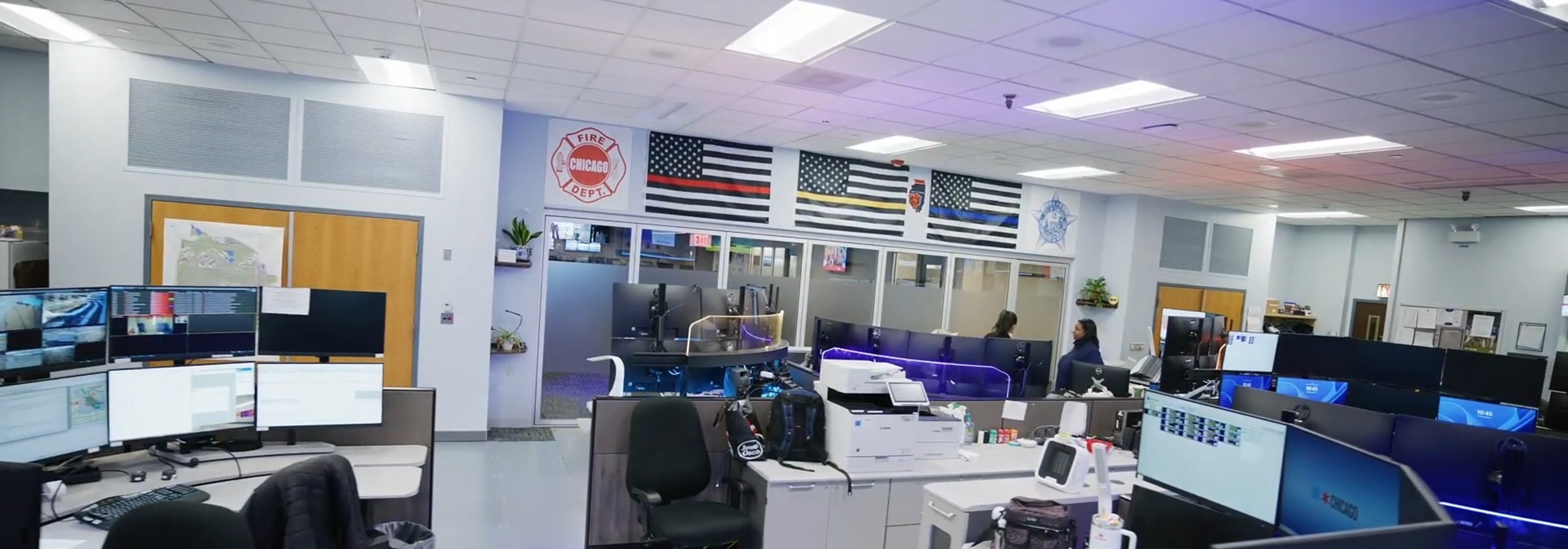
 

O'Hare Image

What happens when your operations center is outdated and no longer supports modern demands? How do you upgrade critical infrastructure without disrupting 24/7 operations?

For the City of Chicago’s O’Hare International Airport, these were real challenges. With aging workstations, complex infrastructure constraints, and high-stakes operations, they needed a modern solution.

In this case study, you’ll see how a highly customized workstation solution was designed and implemented, overcoming infrastructure limitations, supporting multiple departments, and delivering a seamless live cutover.


Check out how it all came together with Midwest Territory Manager, Jhovana Cervantes:


Project Overview: Modernizing a 20+ Year-Old Control Center

The Chicago O’Hare Operations Control Center required a full workstation upgrade after more than two decades of use. The goal was not just to replace furniture, but to enhance operator performance, comfort, and efficiency across multiple departments, including:

    • Airport Police
    • Fire Operations
    • Security & Access Control
    • Supervisory Teams

The project timeline spanned approximately 11 months, from initial planning to final installation.

Before the project could move forward, the team encountered an unexpected delay. O’Hare initially reached out under a previous city contract tied to an earlier project, but that agreement had expired, delaying progress while the City determined how to proceed. After several months, a new contract was awarded to facilitate procurement, allowing the project to move forward. Once in place, the team quickly aligned on a game plan and resumed progress without compromising the overall design.


The Designer:

It was a complex puzzle working within the existing infrastructure, but that challenge is what made this project so fun, and ultimately so rewarding to deliver

— Meghan Dinardi
Design Manager with Xybix

Meghan_2021_300p


The Core Challenge: Working Around a Nonstandard Raised Floor System

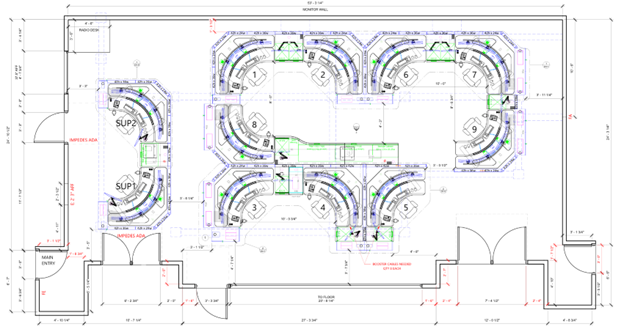
One of the biggest obstacles was the existing raised floor trough system, which dictated how power and data could be routed.

Key Challenges Included:

    • Nonstandard power and data layout
    • Fixed trough locations limiting workstation placement
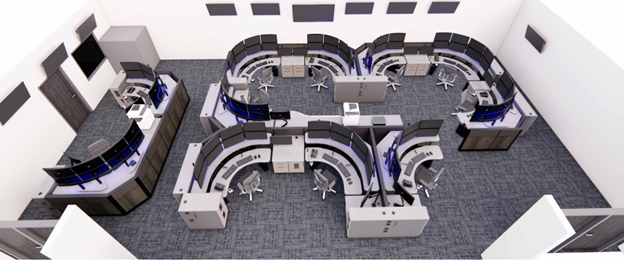
    • Requirement to support 9 operator stations + 2 supervisor stations
    • Need to maintain alignment with existing infrastructure

Why this mattered:
Standard workstation configurations simply would not work. We had to account for physical constraints beneath the floor, making layout design significantly more complex.

The Solution: Custom Configuration and Strategic Design


1. Flexible Workstation Design

A dual-surface workstation system was selected to provide:

    • Independent monitor and keyboard height adjustment
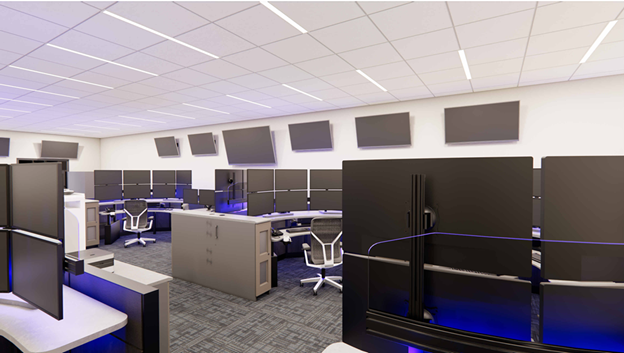
    • Support for 8–9 monitors per operator
    • Improved ergonomics for long shifts

This allowed each operator to personalize their setup without compromising the overall layout.

2. Creative Infrastructure Alignment

To work within the raised floor constraints:

    • Multiple CPU cabinet types and configurations were strategically selected
    • Workstations were arranged to align precisely with trough pathways
    • Layout iterations were minimized to maintain project efficiency

Result: Only one true revision was required after initial concepts, an impressive outcome given the complexity.

3. Operator-Centric Features

The final solution focused heavily on usability and comfort:

    • Sit/stand adjustability for all users
    • Monitor depth adjustment to reduce eye strain
    • Integrated climate control (heating and cooling at each station)
    • Personalized lighting controls

Take a virtual tour!


Installation: Executing a Live Cutover

This project required a live operational transition.

What That Means:

    • Existing workstations remained active during installation
    • New stations were installed in phases
    • No disruption to critical airport operations

The Results: Improved Performance and Operator Satisfaction

Immediate Outcomes:

    • Seamless transition with minimal disruption
    • Positive operator feedback across all departments
    • Improved workflow and spatial efficiency

Long-Term Benefits:

    • Enhanced ergonomics and reduced fatigue
    • Greater flexibility for different operator roles
    • Future-ready infrastructure aligned with current demands

Upgrading an operations center with infrastructure constraints doesn’t have to mean compromise. With the right design approach, even the most complex environments can be transformed.

If you’re dealing with outdated workstations, poor cable management, or systems that no longer support your team, you’re likely experiencing inefficiencies and operator frustration.

With experience designing mission-critical environments like O’Hare’s Operations Control Center, we help teams create solutions that balance performance, comfort, and real-world constraints.

If you’re ready to upgrade your control room, let’s connect!

 See How the Xybix Team Can Help